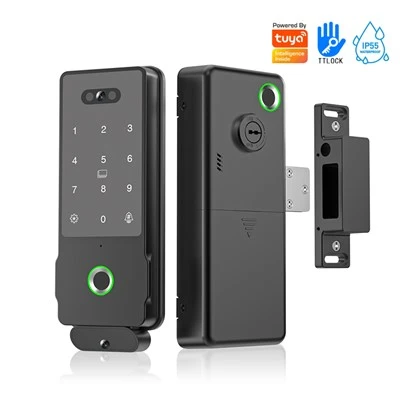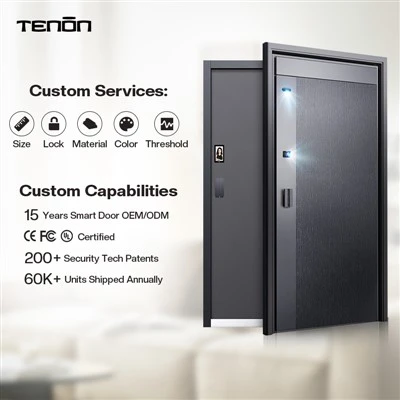

In the era of rapid technological advancement, smart home devices have become increasingly popular, with smart door systems leading the way. As a prominent smart door system supplier, we are often asked about the compatibility of our products with Zigbee and Z-Wave. In this blog, we will delve into the details of these two wireless communication protocols and how they work with our cutting-edge smart door systems.
Understanding Zigbee and Z-Wave
Before we explore their compatibility with smart door systems, let's briefly understand what Zigbee and Z-Wave are.
Zigbee is a low-power, wireless mesh network protocol that operates on the IEEE 802.15.4 standard. It is designed for short-range communication and is commonly used in home automation devices. Zigbee offers high flexibility and scalability, allowing multiple devices to communicate with each other in a network. It operates on the 2.4 GHz frequency band, which is also used by Wi-Fi and Bluetooth, but it uses a different communication method to avoid interference.
On the other hand, Z-Wave is a proprietary wireless communication protocol specifically designed for home automation. It operates on a lower frequency band (908.42 MHz in the United States and 868.42 MHz in Europe), which provides better range and penetration through walls compared to Zigbee. Z-Wave is known for its reliability and ease of use, making it a popular choice for smart home applications.
Compatibility of Smart Door Systems with Zigbee
Our Residential Smart Door System is fully compatible with Zigbee technology. By integrating Zigbee into our smart door systems, we offer users a seamless and efficient home automation experience. Zigbee allows our smart doors to communicate with other Zigbee-enabled devices in the home network, such as smart lights, thermostats, and security sensors.


For example, when you unlock your smart door using a Zigbee-compatible smart lock, the door can send a signal to the connected smart lights to turn on automatically, creating a welcoming environment as you enter your home. Additionally, Zigbee's mesh network capabilities ensure that the communication between devices is reliable and stable, even in large homes or buildings.
The Facial Recognition Smart Door System also benefits from Zigbee integration. With Zigbee, the facial recognition module can communicate with other smart home devices to enhance security and convenience. For instance, if the facial recognition system detects an authorized user, it can send a signal to the smart security system to disarm automatically.
Compatibility of Smart Door Systems with Z-Wave
Our Embedded Intelligent Door System is designed to be compatible with Z-Wave technology. Z-Wave's long-range and reliable communication make it an ideal choice for our embedded intelligent door systems, especially in larger homes or commercial buildings.
Z-Wave allows our smart doors to communicate with other Z-Wave devices in the network, such as door sensors, motion detectors, and smart hubs. This enables users to create customized automation scenarios and control their smart doors remotely. For example, you can set up a Z-Wave automation rule to automatically lock your smart door when you leave home, or to unlock it when you are approaching.
The Minimalist Frame Aluminium Smart Door System and Aluminium Smart Door System also support Z-Wave integration. This allows users to integrate these stylish and modern smart doors into their existing Z-Wave home automation ecosystem, providing a seamless and unified experience.
Comparing Zigbee and Z-Wave for Smart Door Systems
When choosing between Zigbee and Z-Wave for your smart door system, there are several factors to consider.
Range: As mentioned earlier, Z-Wave has a longer range compared to Zigbee. If you have a large home or a commercial building, Z-Wave may be a better choice as it can provide more reliable communication between devices.
Interference: Zigbee operates on the 2.4 GHz frequency band, which is also used by Wi-Fi and Bluetooth. This can potentially lead to interference issues, especially in areas with a high density of wireless devices. Z-Wave, on the other hand, operates on a lower frequency band, which is less susceptible to interference.
Scalability: Both Zigbee and Z-Wave support mesh networks, which allow multiple devices to communicate with each other. However, Zigbee generally offers a higher level of scalability, making it suitable for larger home automation systems with a large number of devices.
Device Compatibility: The choice between Zigbee and Z-Wave also depends on the other smart home devices you already have or plan to install. If you have a majority of Zigbee-enabled devices, it may be more convenient to choose a Zigbee-compatible smart door system. Similarly, if you already have a Z-Wave home automation ecosystem, a Z-Wave-compatible smart door system would be a better fit.
Conclusion
In conclusion, both Zigbee and Z-Wave offer reliable and efficient wireless communication solutions for smart door systems. Our smart door systems are designed to be compatible with both protocols, allowing users to choose the one that best suits their needs and existing home automation setup.
Whether you prefer the high flexibility and scalability of Zigbee or the long-range and reliability of Z-Wave, our smart door systems can provide you with a seamless and secure home automation experience. If you are interested in learning more about our smart door systems or have any questions about their compatibility with Zigbee or Z-Wave, please feel free to contact us for a detailed discussion and potential procurement.
References
- IEEE 802.15.4 - Standard for Local and metropolitan area networks -- Part 15.4: Low - Rate Wireless Personal Area Networks (LR - WPANs)
- Z - Wave Alliance: Technical documentation and research on Z - Wave technology